

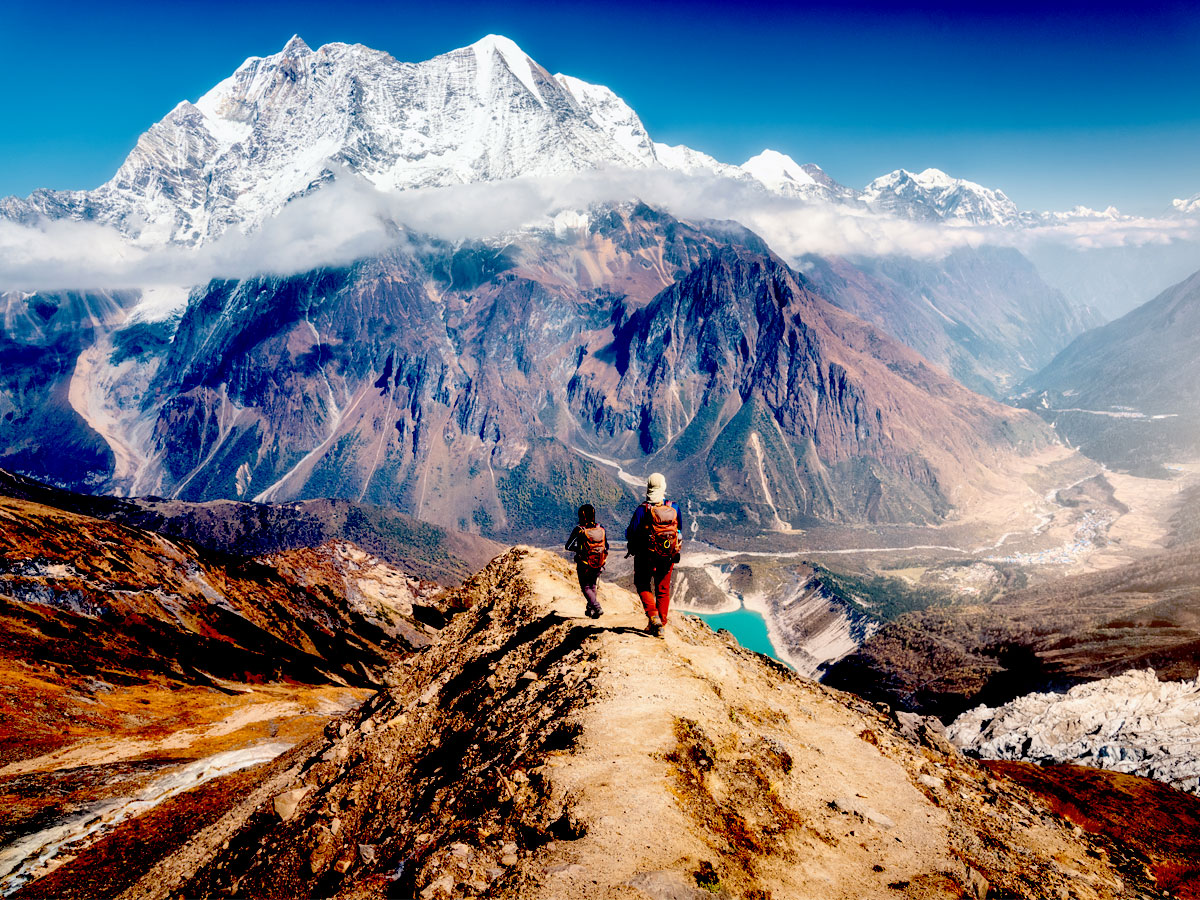
Manaslu circuit trek is beyond a walk along the longest virgin Himalayan trekking trail; it is almost like walking in one of the least spoiled and most preserved ecosystems, and coincidentally, relaxed hiking trails. It is true that, among other factors, the virgin Manaslu area is safe from the illicit trade of flora and fauna. Slow walking trekkers, with curiosity in their eyes, following the trail, can find unique flora and the secret wild world of animals in different altitudes. Locating these animals makes trekking so much more interesting; every day is a real-time natural adventure.
Explaining the biodiversity of the Manaslu region
Altitude range, from about 600m to the top of Mt. Manaslu at 8,163m, is a full representation of altitude variation. The extreme elevation differences explain the climatic diversity in the Region. It’s all fine and good where the forests are dense and flowering shrubs flourish at lower elevations. Still, as you work your way up into the higher altitudes, the character of the terrain breaks out into alpine meadows and extreme conditions where only the hardiest forms of life can survive.
The Region is a Passerine bird habitat for various birds, contributing to a diversity of avifauna; lately, the site has been attracting trekkers due to being a multi-ecological system possessing the highest diversity compared to other developed ones.
Key Points. Understanding of Plant Life At Different Altitudes
One of the obvious ways to work out what flora one might come across on the Manaslu Circuit is to take into account various plants at different elevations. Heading down, you pass through thicker and denser vegetation dominated by sal, rhododendron, bamboo, and pine trees. In the spring, forests of rhododendron in all shades of red, pink,nk and white feature prominently on the trek and are probably the most familiar plant on it.
If you continue up, the woods thin out and junipers, birch, rhododendron, and alpine shrubs take over. Beyond the timberline, plants are widely spaced and are composed chiefly of mosses, lichens, and hardy alpine flowers that have adapted to life under a cover of ice,e which remains for most of the year,r as well as a very short growing season.
Recognizing Medicinal and Endemic Plants
The Manaslu region is covered with a large number of medicinal plants that have been traditionally used by the local people for centuries. A few of these plants come from the Himalayas and are identifiable by their peculiar leaves, strong scent, ts or strange ways of flowering.
You can expect to see herbs including “mountain nettle”, wild garlic, and fragrant bushes on approaches through the trails or near habitation. You can find out how locals recognise these plants and even worship them on this trek guided by professional guides from Sherpa Expedition and Trekking. Just remember to keep your hands to yourself because many of these plants/animals are protected and perform a vital function in the local ecosystem.
Spotting Mammals Along the Trail
Wildlife on the Manaslu Circuit Trek: It is sometimes a game of patience or silence, but with a bit of luck, we too could see animals along the way. Shy humans are shy of a lot of animals. Animals. In the woods, you may also spot signs of mammal tracks, dirt, and scarred tree bark. Himalayan tahr, blue sheep, and musk deer are some of the wildlife you are likely to see, particularly in more remote areas of the trail. Elusive species, such as the snow leopard, are thought to live in higher and more varied altitudes of the Region, but sightings are sporadic. Animal movements are best seen in the early mornings and late afternoons.
Birds at Manaslu Conservation Area
Bird watching is one of the most enjoyable highlights of seeing the wildlife on this Manaslu circuit trekking trail. All sorts of birds live in the area, from resplendent forest-dwellers to high-altitude spe That’s. That’s why it helps to listen closely for their bird calls and watch the movement in the trees for identification assistance. At the lower elevations, pheasants and woodpeckers can be found along with a variety of colorful songbirds. At the same time, at higher altitudes, eagles, vultures, and even the Himalayan griffon offer beautiful displays. There are also seasonal shifts to consider: migrants arrive and depart on various schedules.
Understanding Animal Behavior and Its Statistics
It’s not just the appearance of fauna, but behavior and habitat. Thus, each species has a niche and predictable habits with regard to feeding, sheltering, and moving. What you see where they appear, what they feast upon, and how their conduct differs between environments can go a long way in telling one species from another. For example, blue sheep can frequently be seen in a wide open alpine slope, ope but musk deer like dense forest cover. By being aware of these habitat preferences, it will be more likely to identify species sound recordings correctly without disturbing their natural behavior.
Fauna Observation by Season.
Season largely dictates the conditions you’ll encounter when trekking the Manaslu Cir,cuit too. The flowers bloom in spring, nature comes alive, and you can see everything clearly – perfect for leafing through tracks! Summer brings lush green foliage but also thicker plant growth that can obscure wildlife just a bit—what to see: The cool, dry days of fall frame animals well up high. Winter is a quiet time for plants, but snow-covered animal tracks let who-knows-who’s been paying a visit. Understanding of seasons helps to maintain realistic observing perceptions.
Animal ecology and expertise in conservation science
There is an obligation to protect them when rare flora and fauna are found. The Manaslu Region is a fragile environment where human impact can do irreparable damage that will ttakegenerations to mend. Ethical is going to be from a distance, don’t youdo make-ups, and never collect animals andtouching a photograph, a photographer must take with due care and without disturbing natural behavior. Responsible trekking is key to the success of local conservation work, and what we don’t do here is vital when it comes to preserving the biodiversity for future generations.
Final Conclusion
Aside from spectacular mountain views, trekking the Manaslu Circuit offers a range of diverse cultures as you step through such contrasting scenery. How to recognize that rare tree or plant, the aloplanthe trail will change your stay in touch with nature, you’ll enjoy trekking by following the fluctuation in altitude, one can observe altitude habitats, observing specific trends, and through the laws of conservation, trekking conservation learning provides much more than the natural patrimony gained or experienced from a visit to the area.
Find life behind spider webs deep in the jungle ofManasManaslu’sslu’s sure math course, which highlights that learning is also fun and continues long after you reach the end of the trail: the partnership with Sherpa Expedition and Trekking!
